
The New SpyParty Environment Art Style

I am incredibly excited to introduce the new SpyParty environment art style! Okay, okay, so we officially revealed the new environment art style back in August, right before PAX, but I never actually posted here on the blog about it. Heck, it’s even running in the game now, so if you want to see it for yourself, sign up for the beta!

SpyParty-Environment-Concepts-Teaser-horz

Anyway, to make up for my tardiness, in addition to talking about the environment art style, inspirations, and design goals, I’m going to post a bunch of behind-the-scenes shots of the levels and how they look to John in Maya and Photoshop, so you can see how they’re made. Nothing says behind-the-scenes like a screenshot with wireframed polygons in it, right?

We got some great press coverage when we revealed the new environments, here’s a good sample:

The articles and interviews listed above introduce a bunch of the important aspects of the new environment art style, and I’ll go into more detail on each here!

The Style

Finally, we have a place to stand!

Finally, we have a place to stand!

The first requirement for the SpyParty environment art style was that it complement the new character art style. Since the game is fundamentally about people and their behaviors, John and I spent a long time coming up with the character art style first, and then applied those lessons to the environment art style. If you want the full background on the overall artistic goals, you should read that post as well, but briefly, we designed the art style to be timeless and illustrative. Timeless means it doesn’t look retro or futuristic, or from any specific time period, it could be taking place at any and all times. By illustrative, we mean we aren’t shooting for photorealism nor cartoons, but for a style that looks like it is the 3D version of the sophisticated illustration work from the early 20th century.

Applying the timeless and illustrative aesthetics to the environments meant we wanted to support a wide variety of architectural styles, and so for the reveal we decided to show examples of the aesthetic applied to both a traditional mansion and a modern one. We needed to test out the aesthetic, and make sure it had the dynamic range necessary to render any kind of architecture we could throw at it.

paletteBecause the characters are the stars of SpyParty, we want the environments to fade into the background, but still be beautiful stages on which the parties can unfold. The key to this was to settle on a bi-chromatic palette, with a clear warm/cool separation between the world of the Spy and the world of the Sniper. Our friend, Ocean Quigley,2 helped us push it even further, by pointing out an old artist trick of increasing the color saturation in shadows, rather than decreasing it as would happen if you just rendered normally in most computer graphics tools like Maya, so shadows go to saturated colors instead of black. As you can see in the images of the new environments, the levels are warm hues wherever the Spy can move and interact, but they are cool outside this area. This will hopefully provide subtle but useful visual feedback to both players about what the gameplay bounds of the level are, and where they need to focus their attentions. There’s actually a third and fourth level of background in the environments, where the 3D modeled trees and the 2D silhouette trees spend their time, fading farther and farther back.

In keeping with our illustrative aesthetic, the shapes, surfaces, and edges should have more of an architectural sketch look, rather than a photographic look. This means very little texture on the surfaces, big, simple shapes, and clean lines.

FallingWaterPerspective

Frank Lloyd Wright sketch of Falling Water

We’re still developing the aesthetic for the active objects themselves, but the current plan is to use brighter more saturated colors and completely artificial stage lighting to make things like statues and bookshelves pop visually, denoting them as belonging to the foreground instead of the background. I think of old cartoons like Scooby-Doo, where you could always tell when a character was going to pick up a telephone before they actually did so, because the phone was drawn on a cel instead of painted into the background.

statues-saturation

If you take these statues a giant boulder comes down the hallway.

Inspiration and Reference

Since we’re going for a naturalistic illustrative style, we want both our environments and characters to be loosely based on reference. We treat real-world reference like Goldilocks treats the temperature of her porridge: we want just the right amount, not too much, not too little. It’s really quite difficult to imagine all the subtleties of an actual physical object—whether a house or a person—if you’re not referring to reference while you’re creating. This sense of authenticity is very hard to achieve and a lot of games don’t seem to even strive for it.3 At the same time, you need to know when to simplify, and what structures are important for solidity and naturalism, and which are superfluous detail.

The two reference buildings for the environments revealed here are the incredible James C. Flood Mansion in San Francisco:

Flood Mansion by Mike Hofmann Someday this will all be playable!  How many Spies and Snipers is that?!

 …and SAOTA’s amazing Cove 6 house in South Africa:

The amazing SAOTA designed Cove 6 house in Knysna, South Africa SpyParty-Modern-SniperCam_03

Development

As promised, here’s a small gallery of the environments in Maya and Photoshop. A few highlights:

  • You can see how many layers there are in the concept render shot in Photoshop. The finished concept renders don’t actually exist anywhere in 3D, they’re composed of multiple renders and a lot of touchups and post-production to get the look we wanted. This is why the current realtime level doesn’t look as good yet, not only is it not raytraced, but it also doesn’t have the full lighting models and shaders on it that will emulate what John did in post. The concept renders are the visual targets, though, so we hope to get pretty close.
  • If you look closely, you can see the triangle-count difference between the concept and realtime Modern map: about 10x. The concept model doesn’t even really have textures on it, it’s all done with surface shaders, while the realtime does to bake in the lighting for performance.
  • In the closeups of the bar and fireplace, you can see how John saved polygons when reducing the level, using transparent textures instead of modeling leaves, simplifying shapes, etc.
  • Let’s not even talk about the water.

Galleries and Wallpapers

Here are the full galleries for the new environments! The first image in both galleries is a high resolution 16:9 2560×1440 image, suitable for use as wallpaper. The rest are 1280×720. One cool thing is each gallery has a series of images from the Sniper’s point of view, and you can use the lightbox that pops up as a way to preview how the level might look with a rifle in your hands.

First, modern:

Next, traditional:

Finally, here’s the trailer we released last week with the new artwork running in the game:

If you have any questions about the new environments, leave them below!

Never forget!

Never forget!

  1. by way of Craig Pearson []
  2. former Art Director of Spore, now making indie games at Jellygrade! []
  3. By contrast, Jonathan Blow has gone as far as to hire architects to consult on the Witness structures! []

The New Art is Out!

Despite my best intentions to do it “right after PAX“, I finally released the new artwork into the wild this week! Yes, if you are already a beta tester, just run SpyParty and connect to the lobby and you’ll get the update automatically, and if you’re not a beta tester, and want to check out the slick new look for yourself, head over and sign up for the Early-Access Open Beta right now!

I spent yesterday cutting a trailer to show off the fancy new characters and level:

That video spends a bunch of time ogling the new characters in their environment so you can get a feel for the quality of the models and animations in the game. I’m really happy with how they’re looking, and they’re going to get even better looking in the future: you can still see animation pops, interpenetration, and various oddnesses, and the lighting model is not even close to final, especially on the environment. Still, it’s a huge step! Poor Security Agent Damon…
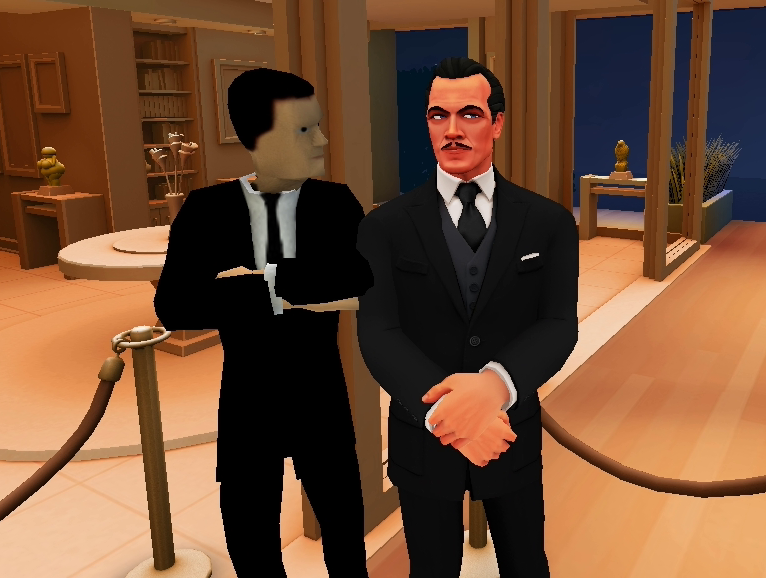
I think I’m at the wrong party. Where did these people get mouths, eyelids, and fingers?

As you can see in the video, I put the new artwork in alongside the old art in a new map named Modern. The old art is going to be around for a long time because it’s where all the tuning and balancing effort has gone over the years, so you fans of nostalgia will have plenty of quality time with it. 

Modern, the new art level! Don’t expect much, gameplay-wise yet, but it’s pretty!

The new art isn’t very playable yet, since we only have the five characters so far, and only a subset of all the animations even for those. John is working away furiously on getting statues and books and drinks and briefcases and everything else supported by the new folks, and then he’ll move on to do the next batch of characters. It will be a while before the new art is tournament worthy.

I don’t want to spend much time on the gameplay for the new art until we have a critical mass of characters to make it a real competition-worthy level, but I did realize people would want to play on the new map with the new art because it’s shiny, so I made a few gameplay modifications and spent a bit of effort getting it working as a game. First, I added the option to only enable a single mission on the map, so you can do “Known 1” or “Any 1 of 3” game types. Since there are only five characters, it turns this map into a bit of a Balcony-lite, which is fun. Second, based on playtesting it on stream the other night, I made the Ambassador unknown to the Sniper. So, combining these, you can do “Known 1 Bug Ambassador”, where the Spy tries to get away with bugging when the Sniper knows he or she is going to do it, but the Sniper doesn’t know which character is the Ambassador! 

It’s a little silly, but it’s fun and it actually elucidated a few interesting things for me about the design going forward, including how nice the game looks from the Sniper viewpoint without the triangles on people’s heads, and also how interesting it is to try to deduce characters from their behavior. The Ambassador has a “personal space violation” mechanic that triggers if somebody stands too close, and watching for that kind of behavior is very much in line with the design aesthetics I’m going for with SpyParty. You can even pretend you’re the Ambassador by bailing out when somebody stands too close to you for too long!
Update on the New Art, and SpyParty at XOXO in Portland

The new art is finally nearing release to beta testers, so if you want to check it out yourself as soon as I post the build, sign up for the beta!  I’ll post more details here when I release it, and of course I’ll stream the release notes on twitch.tv/spyparty and then post them on the SpyParty YouTube channel. Again, a reminder: it’s more of a tech demo than a playable map right now, it’ll be a while before the new art can replace the old art for real competitive play.

I fully intended on having the art released right after PAX, but I underestimated how much stuff I had agreed to do in September, so here we are.

The new artwork is working pretty well on a wide range of machines. For the PAX booth and the Omegathon, I only had to get it working reliably on Intel HD 4000 graphics, but now I need to try to make it work on everything. Dealing with different hardware and software configurations is the only real downside to doing PC games compared to the more closed platforms, but it is a significant downside. Here you can see a bunch of machines I’ve been using for testing, what year they’re from, and what graphics chip they have:

I try to keep a bunch of old machines running for testing, and I owe huge thanks to Ben Kutcher from Intel for always hooking me up, and to Jonathan Blow from The Witness for keeping me in constant supply of his discarded old machines. Especially for a multiplayer indie game, making sure you run on older machines is vitally important because you don’t want to limit your audience any more than you absolutely have to. I also try to develop on slightly old machines, because I think it keeps you honest as a programmer. It’s easy to get lazy if you always develop on a monster machine.

You can see the new map and characters work pretty well on most of the machines in the video, most at playable framerates even before optimization. The two exceptions are the Sony VAIO from way back in 2006, that has an Intel GMA 945 graphics chip in it,1 and the ThinkPad T500 from 2009. The latter is actually fast for a few minutes and then slows down, so I think there’s some kind of memory leak in the driver or something. I need to investigate more, because that hardware should run it fine.2

I also briefly tested on MacOS using Wineskin, and the new art loads correctly, but it won’t draw the new level on the machine I tested. I’m not actually sure how to debug this other than commenting out stuff and hoping it starts working, but I’m crossing my fingers that it’s something simple I can find. Hopefully, once I release the build, MacOS beta testers can give me some feedback on which machines work, if any. I really need to get a Mac at some point…stealing my girlfriend’s machine after she goes to sleep is not a very robust testing methodology.

Loading correctly is actually half the battle, and usually when things go wrong, they go wrong during load. So, I’ve put in some code that will detect if it’s the first time you’ve loaded the new art, and if so, it’ll keep track of whether it crashes during load. If it does, the next time you run it will prompt you for whether you want to skip loading the new art, or try again. The last remaining thing I need to do is make it so if you have loaded the new art and you try to play a game against somebody who skipped loading it, you can both still play the old art levels correctly and it fails reasonably gracefully if you try to play a new art level. This shouldn’t take long to get working. Famous last words.

XOXO

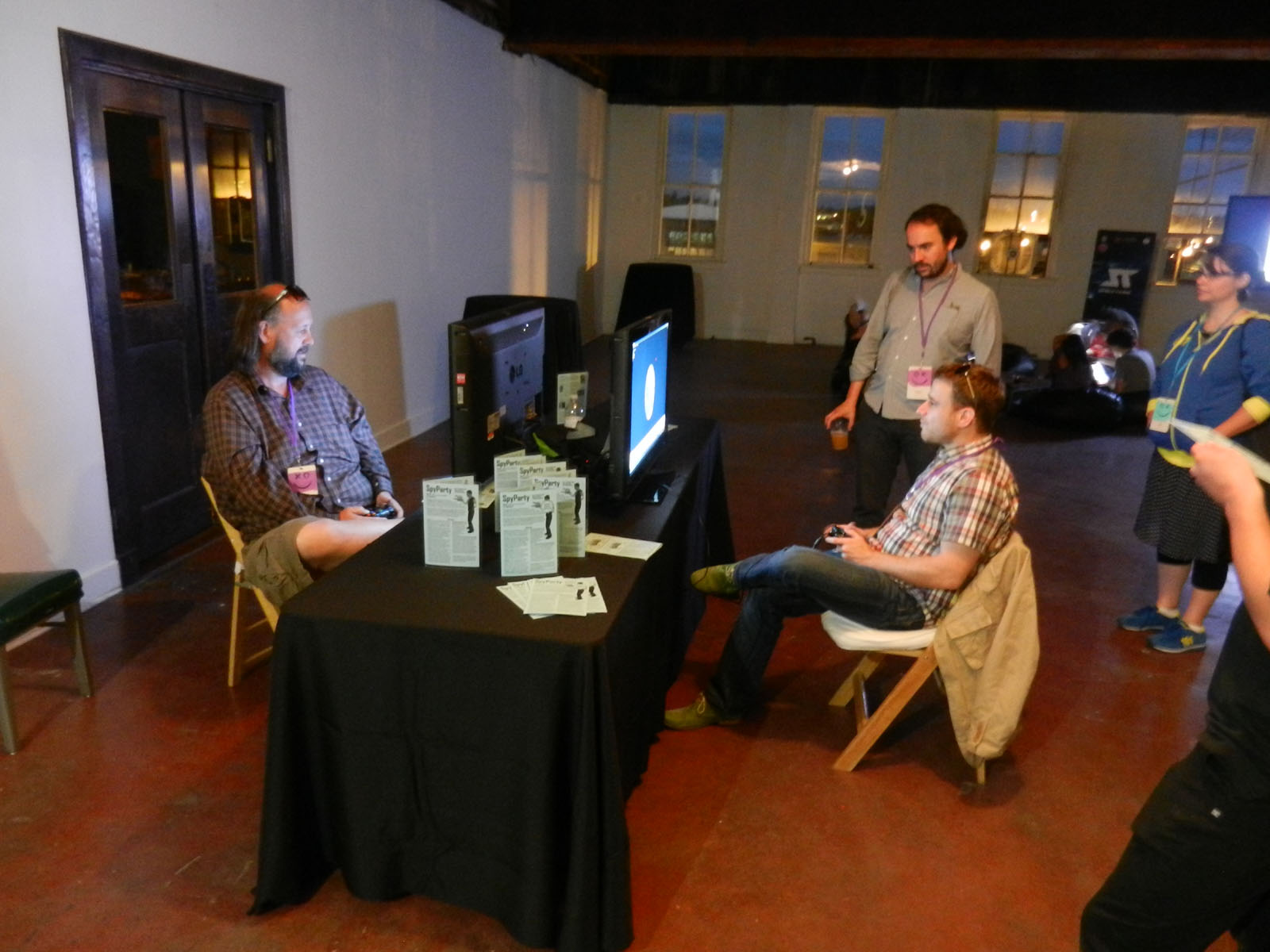
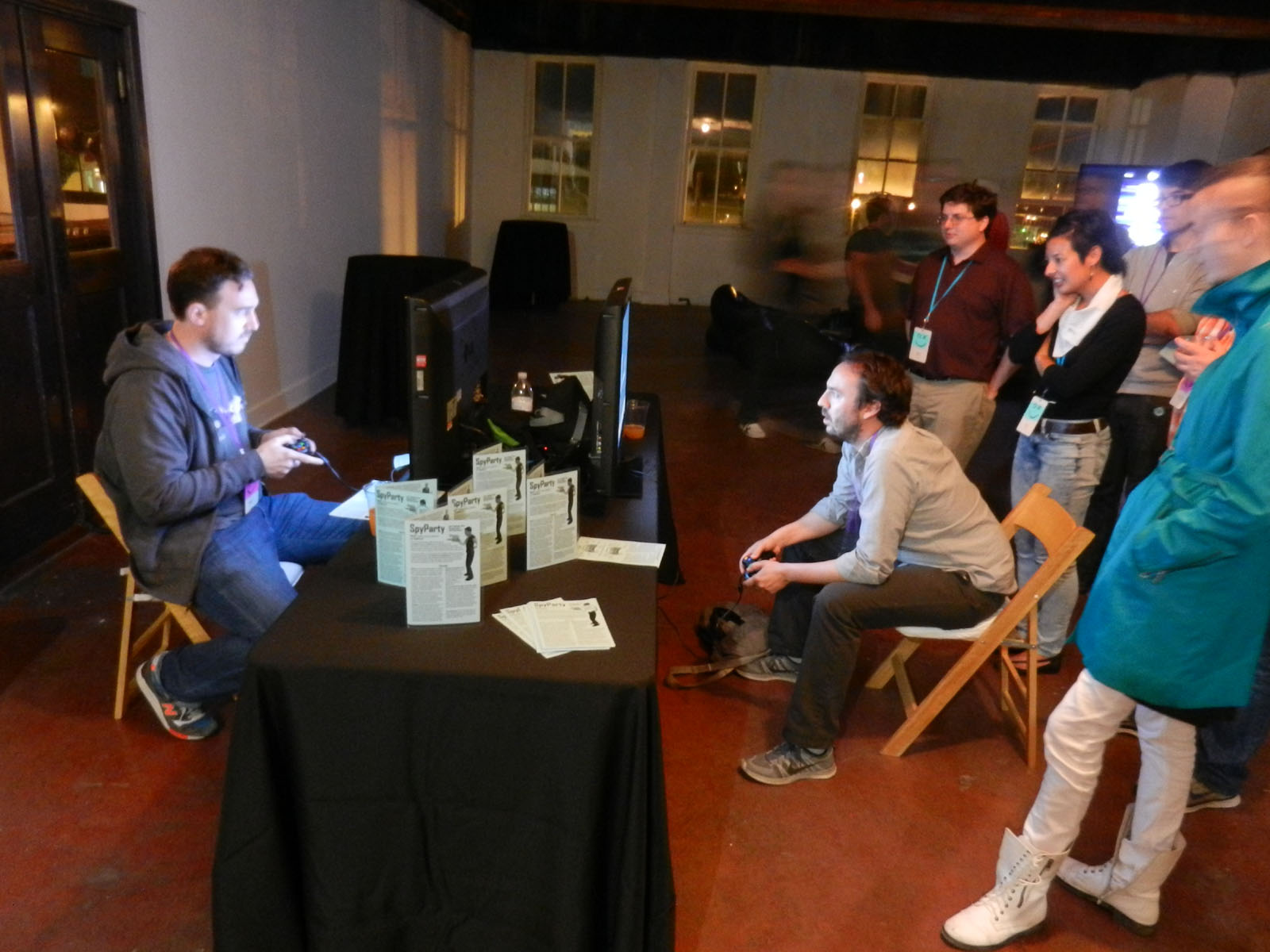
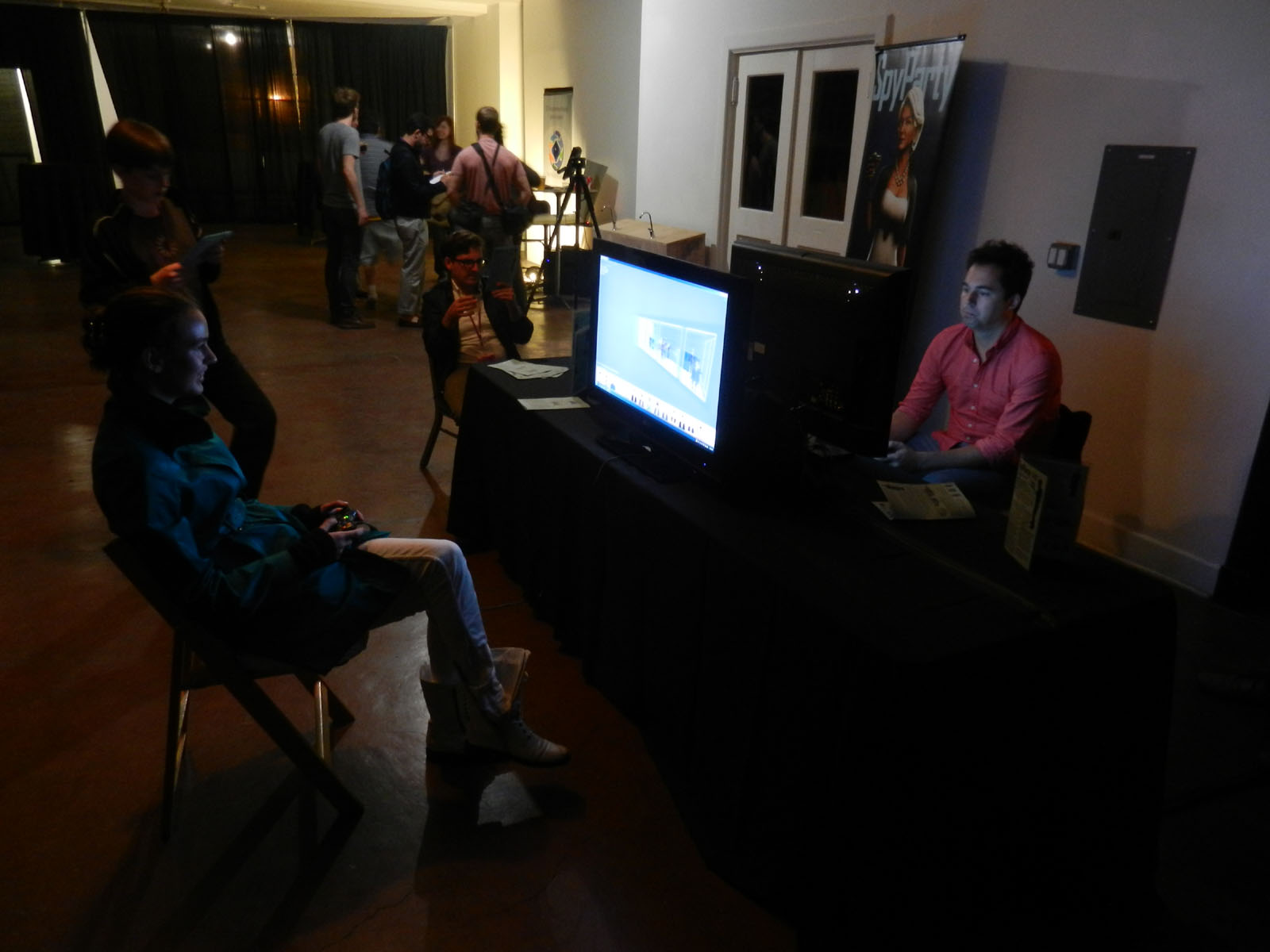
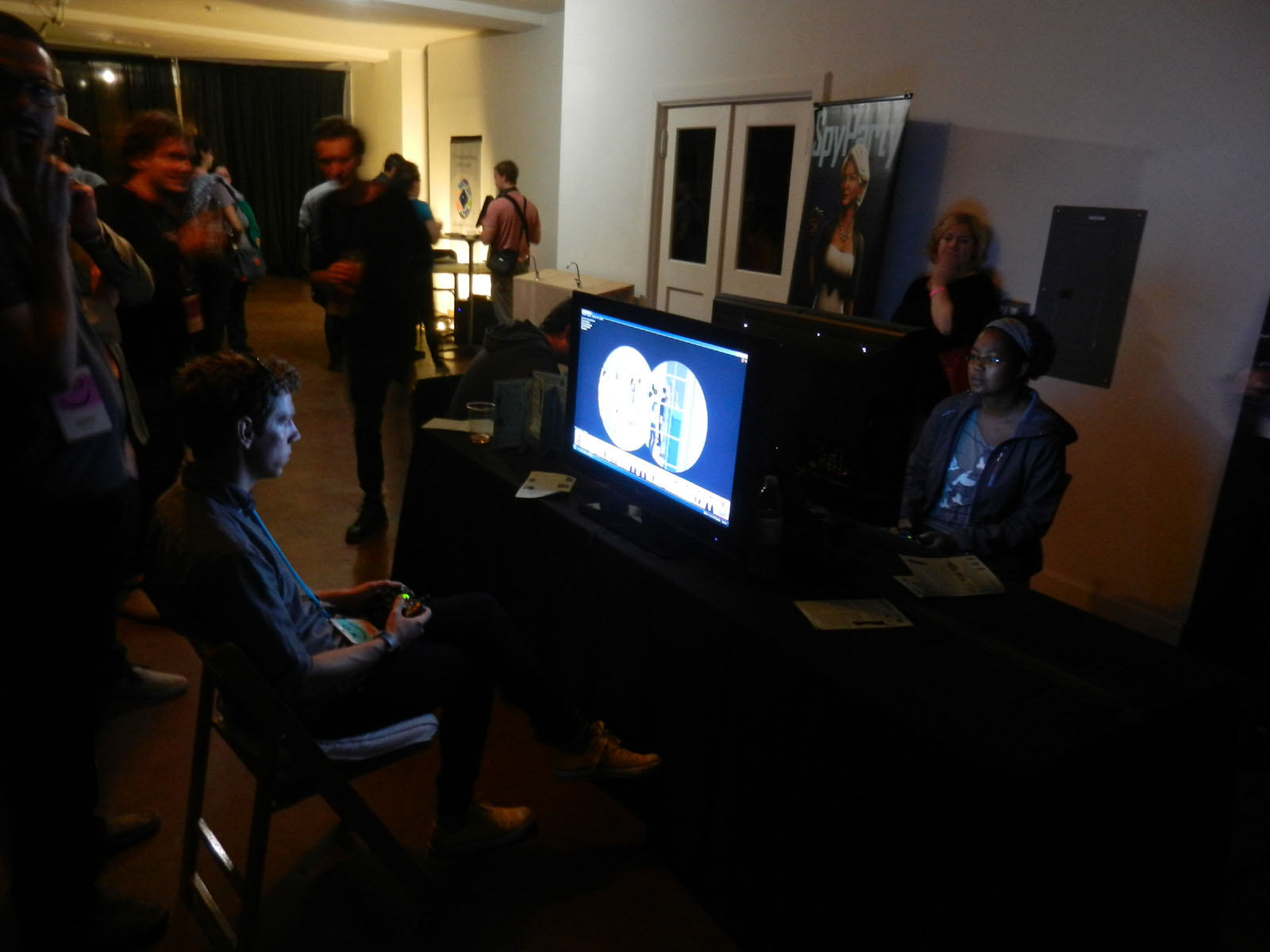
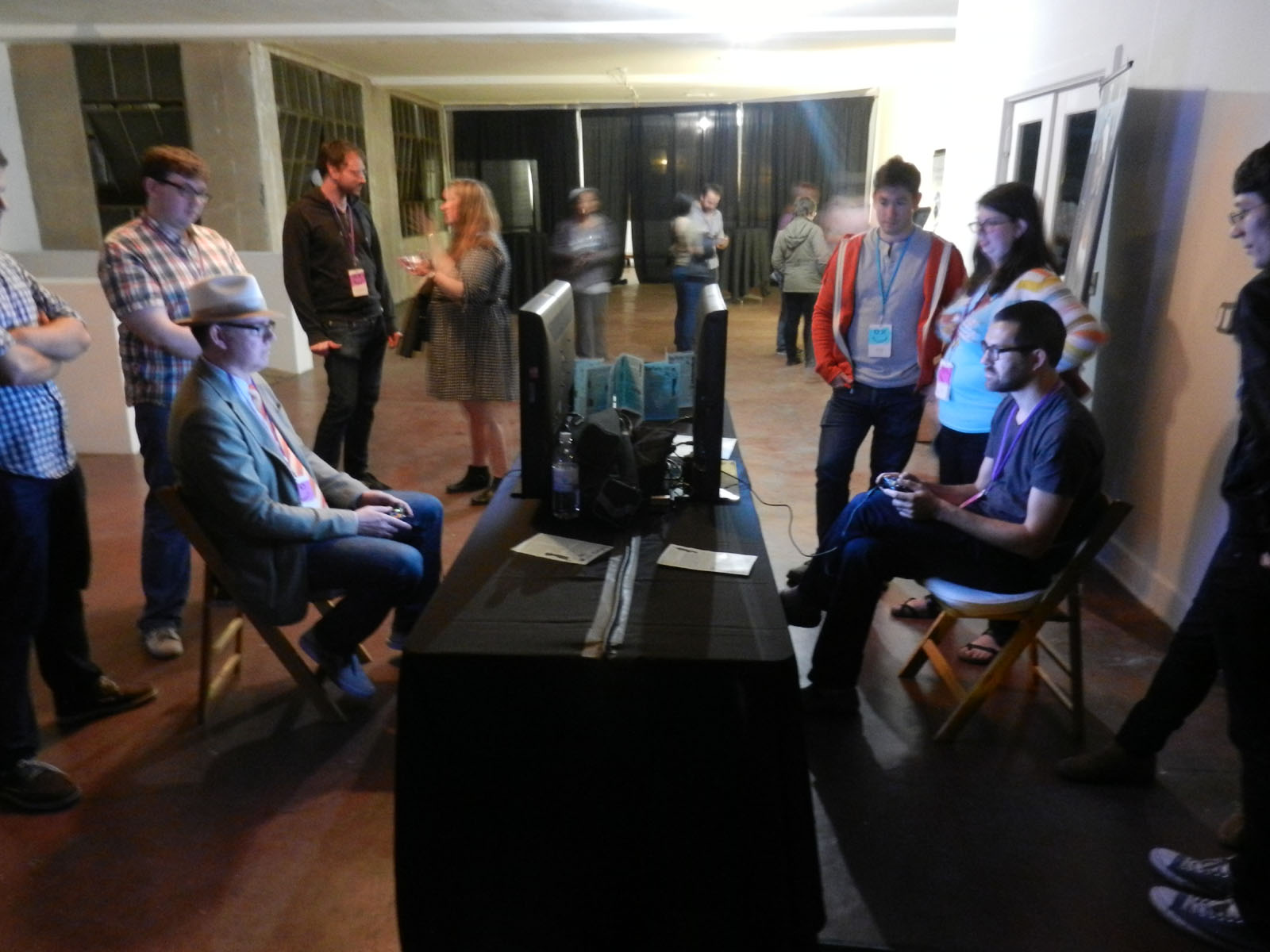
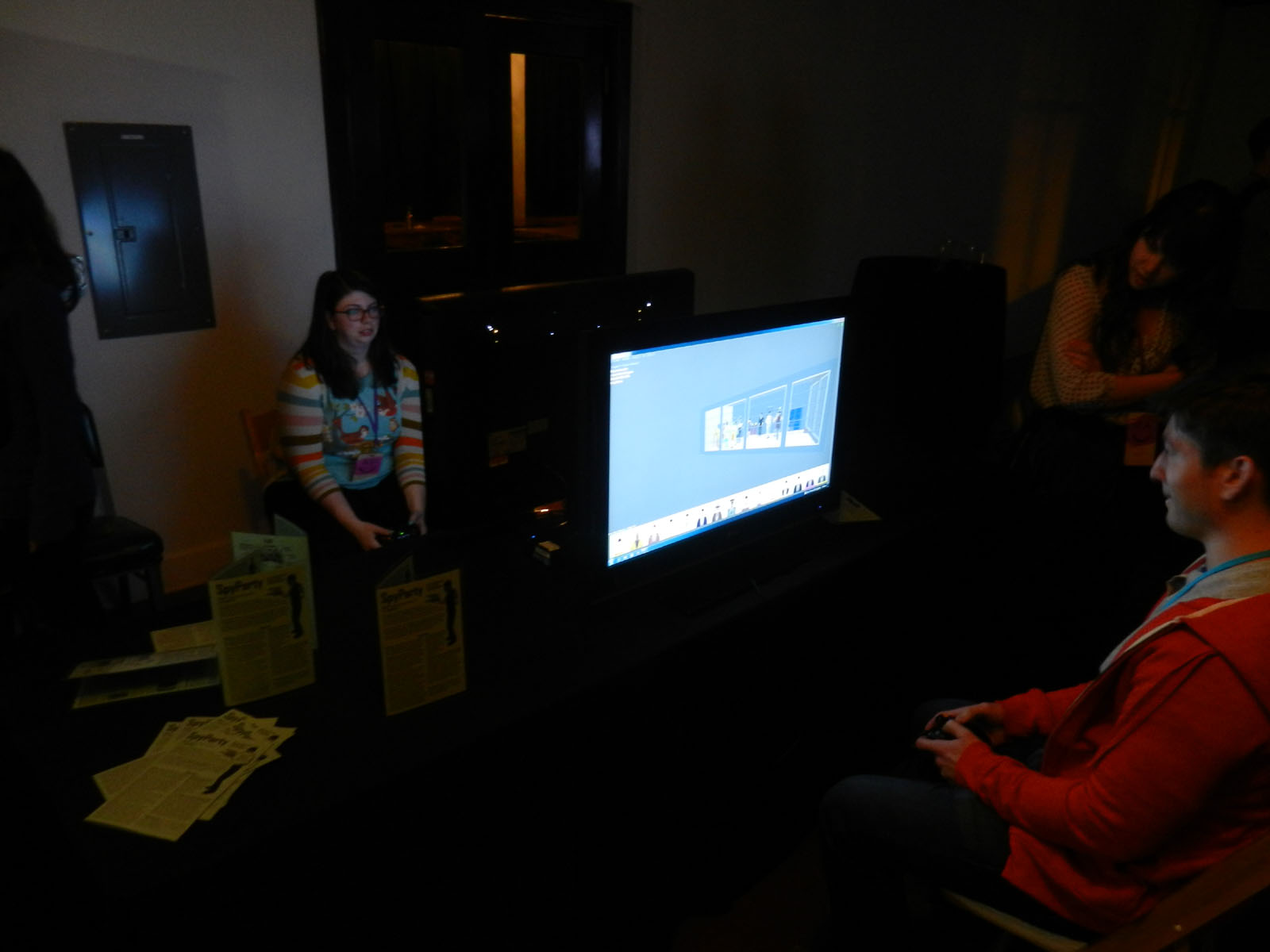
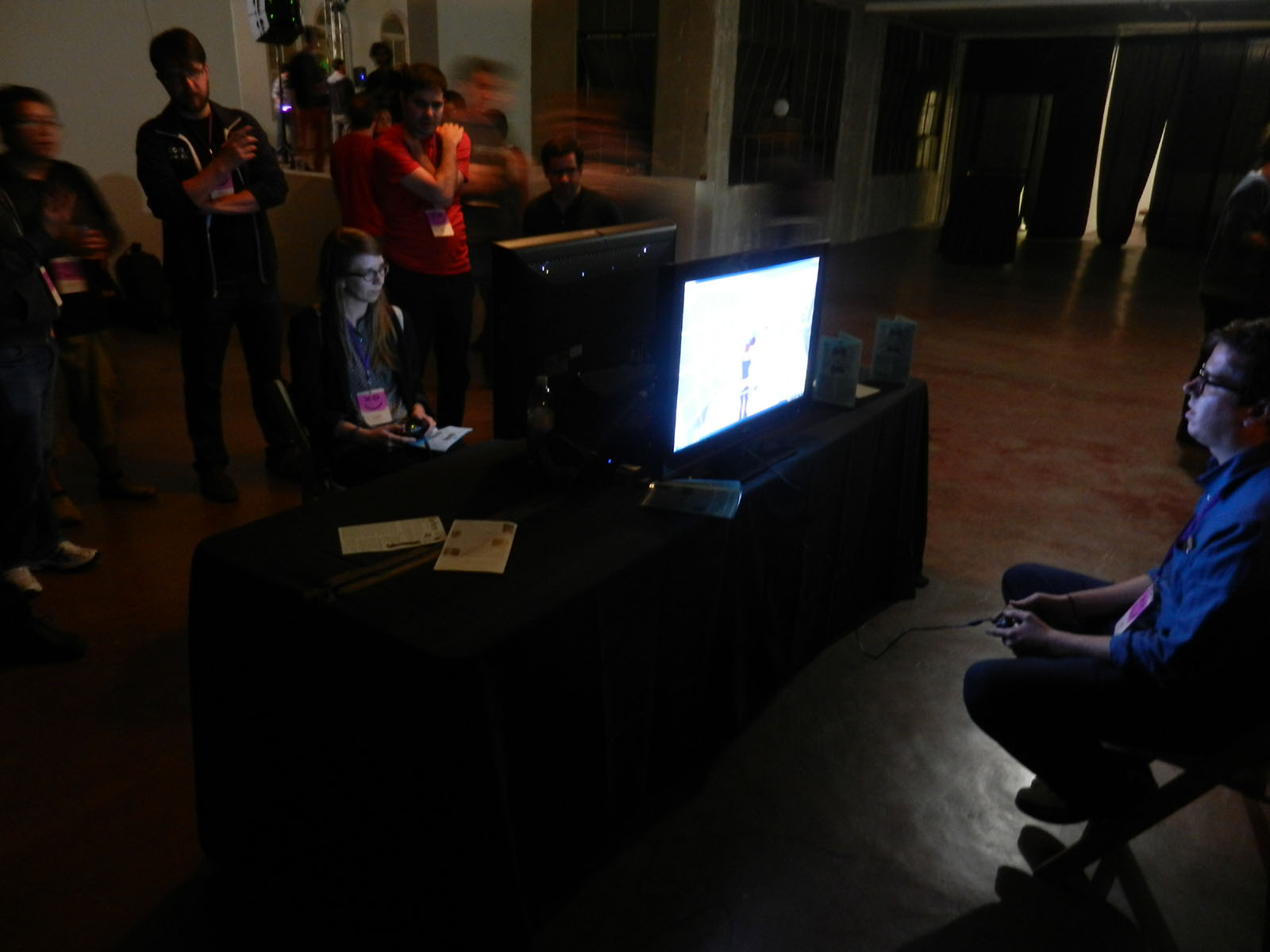
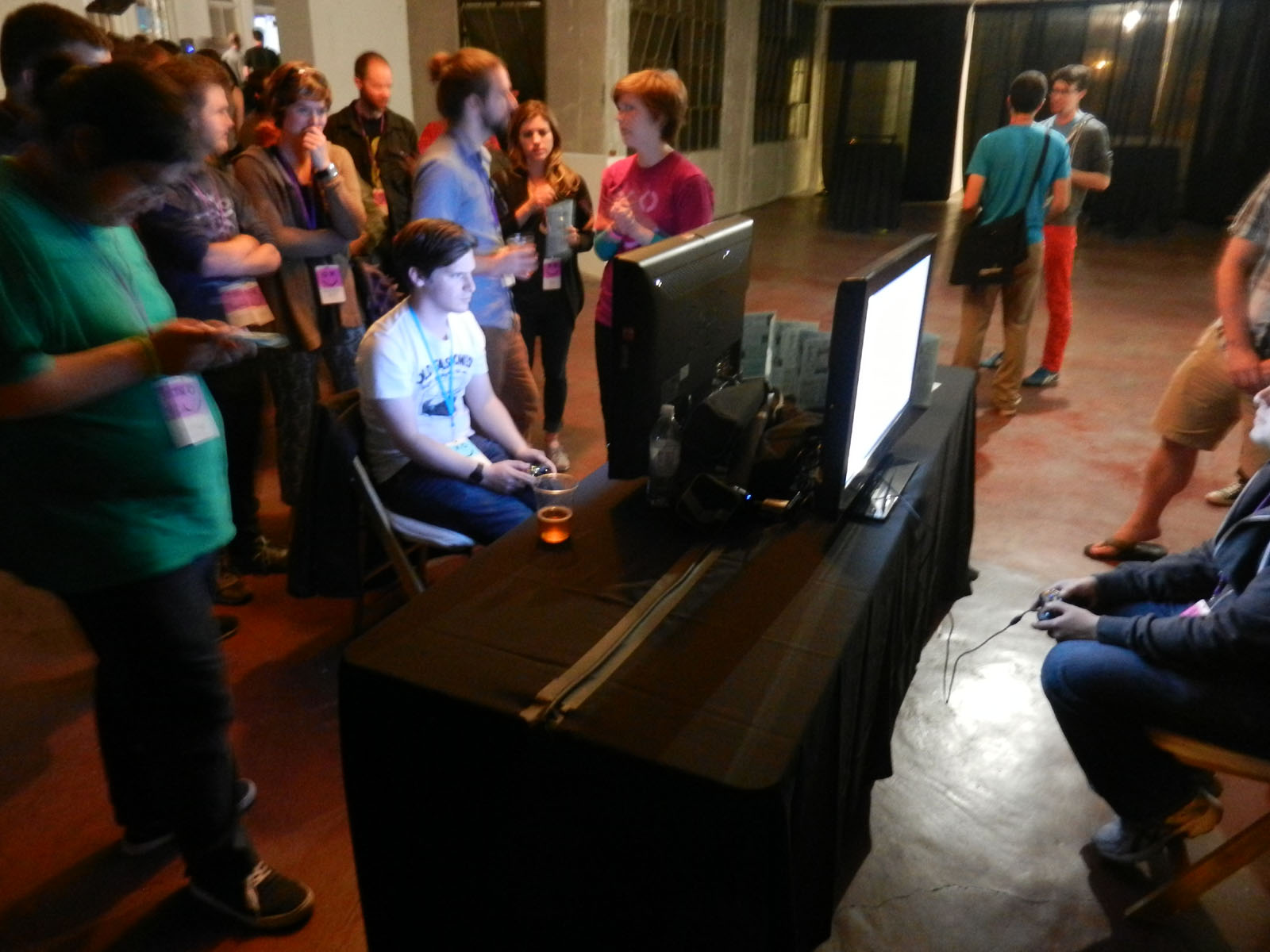
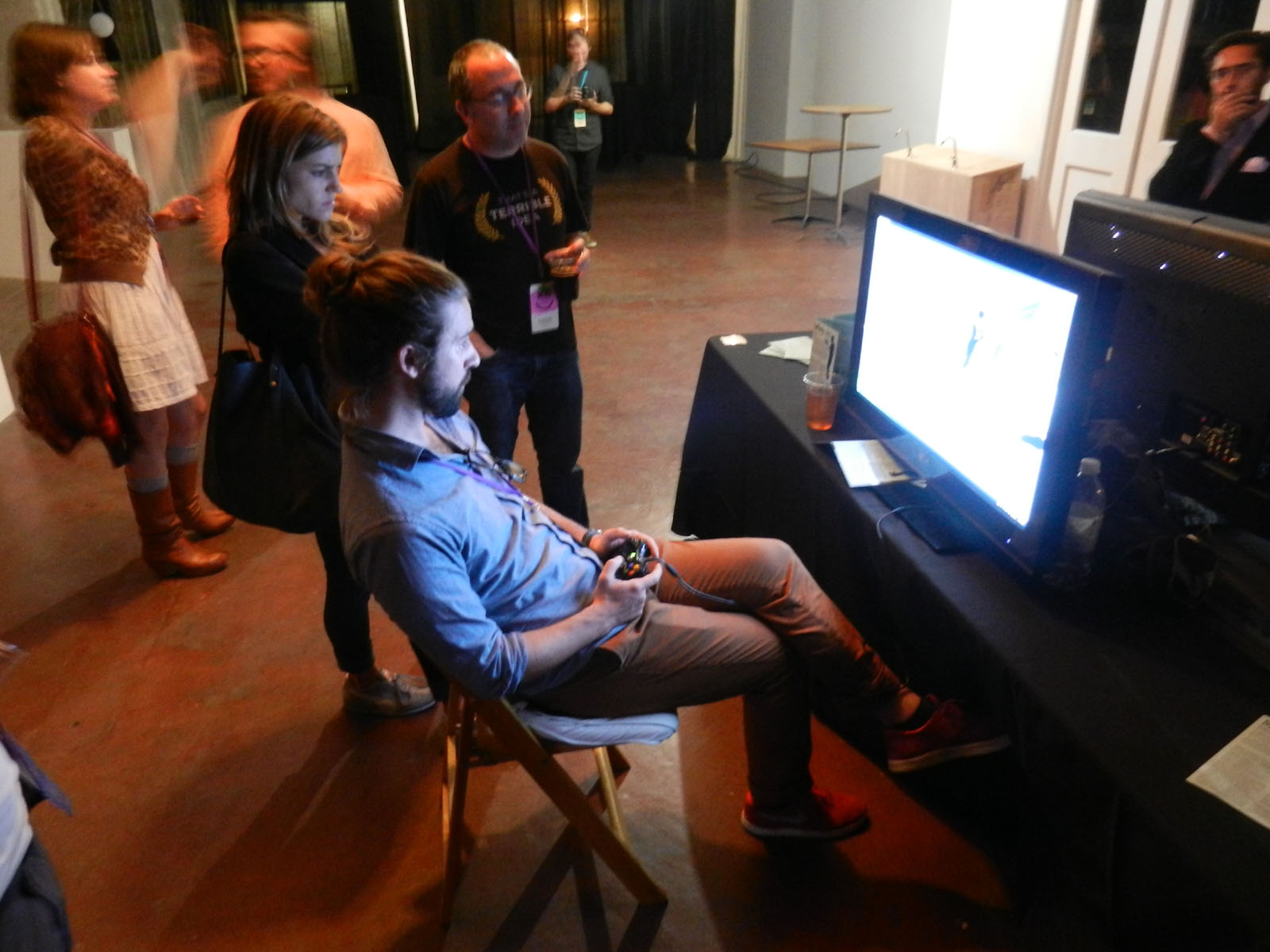
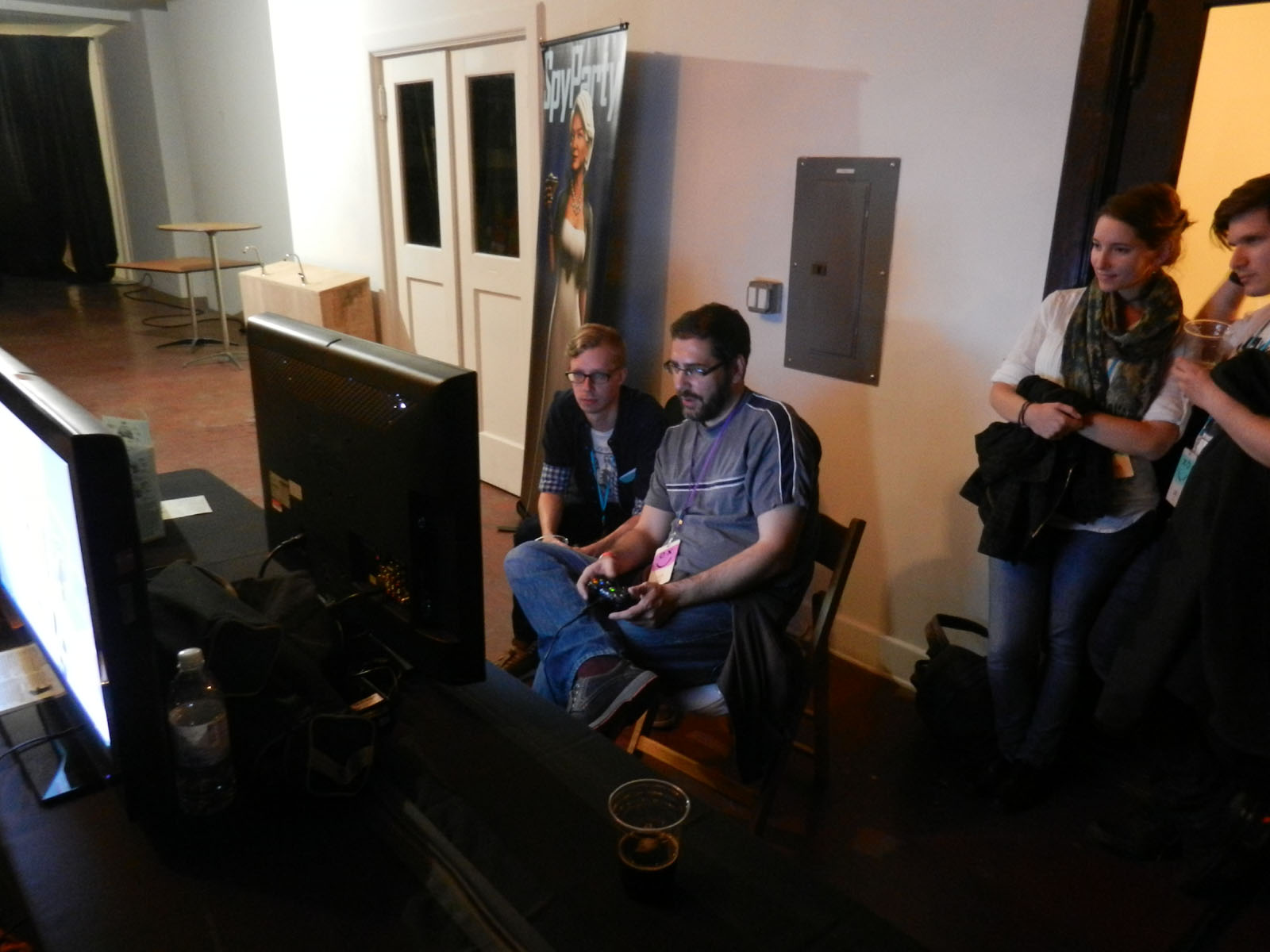
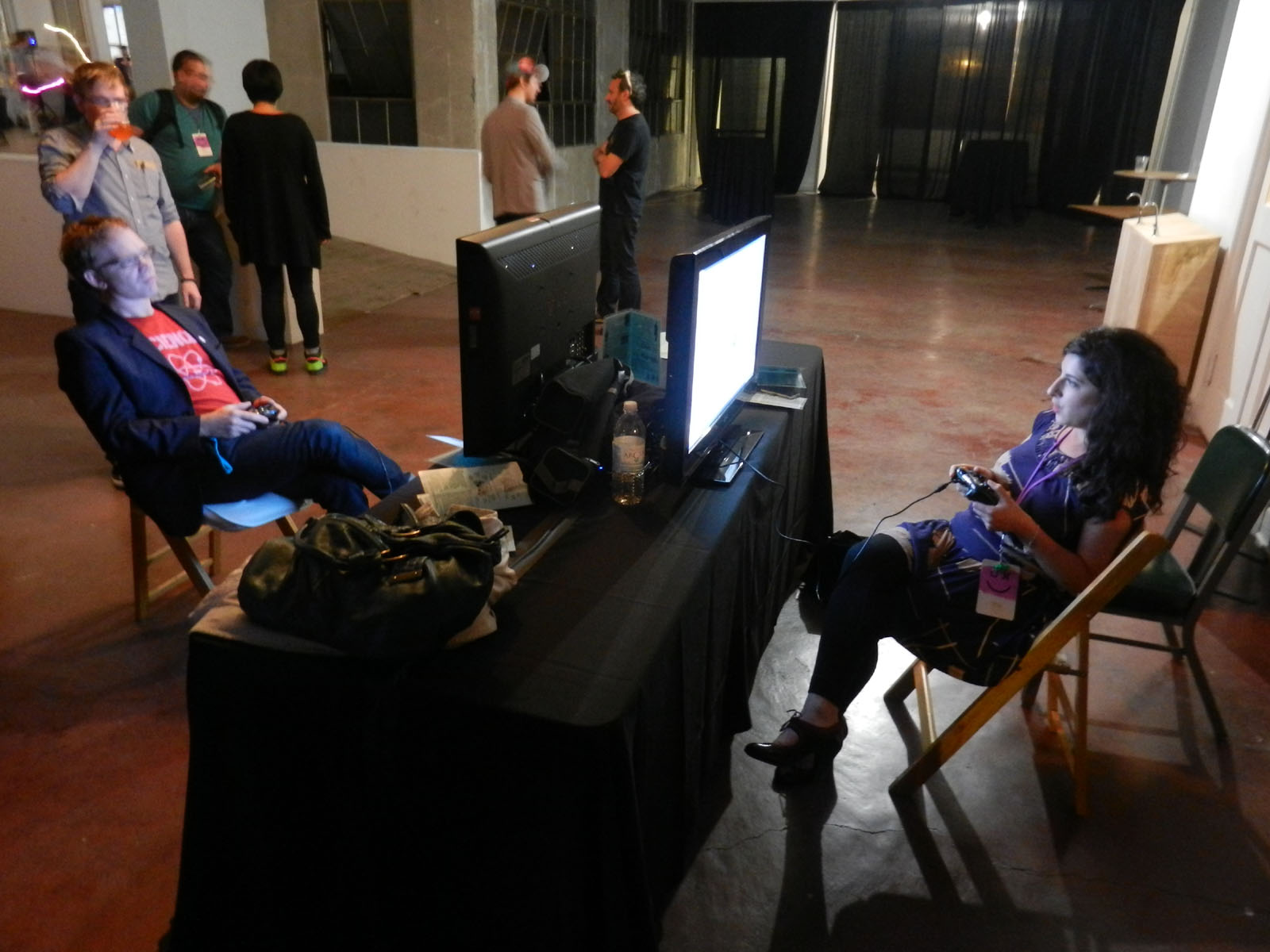
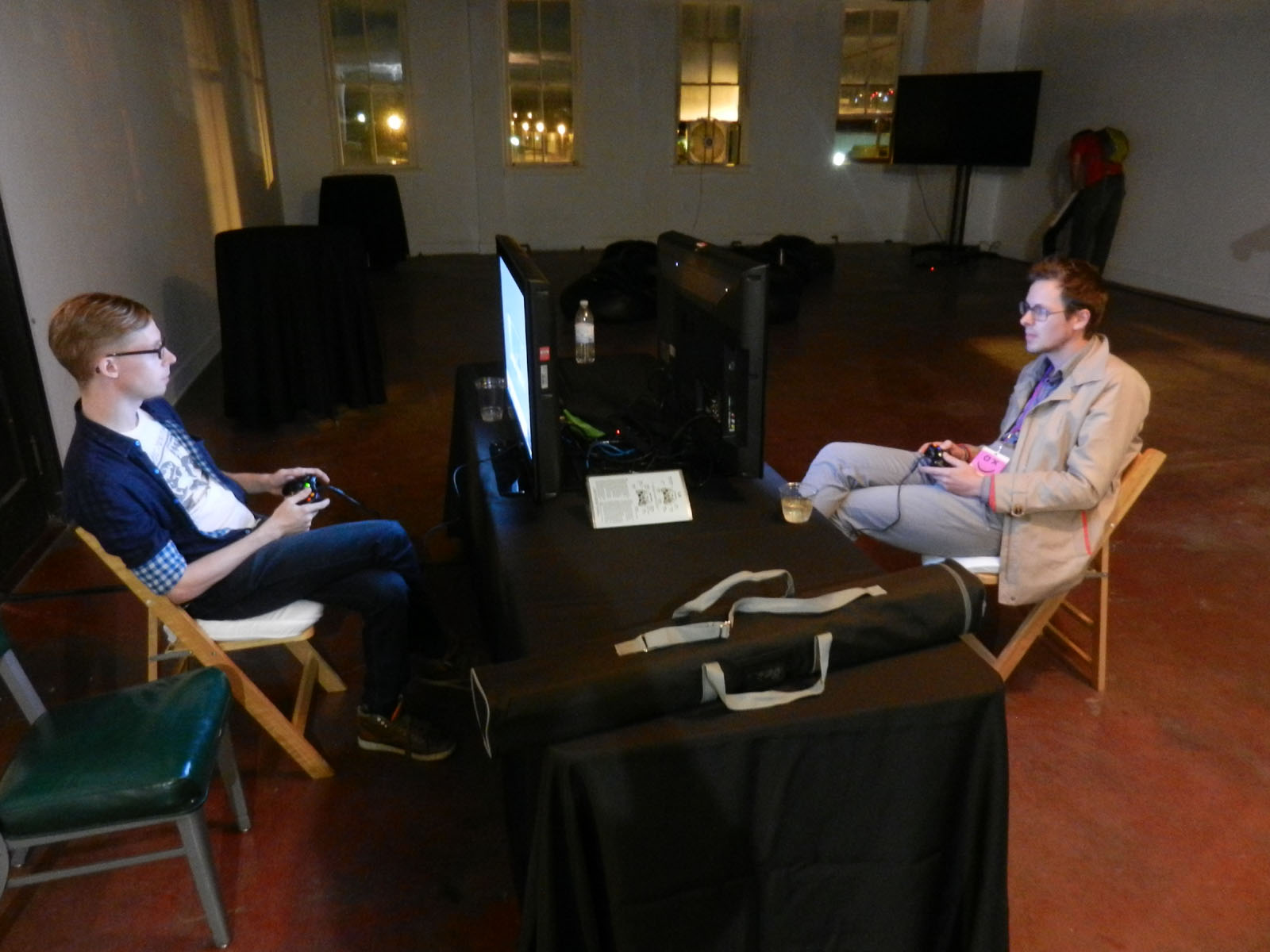
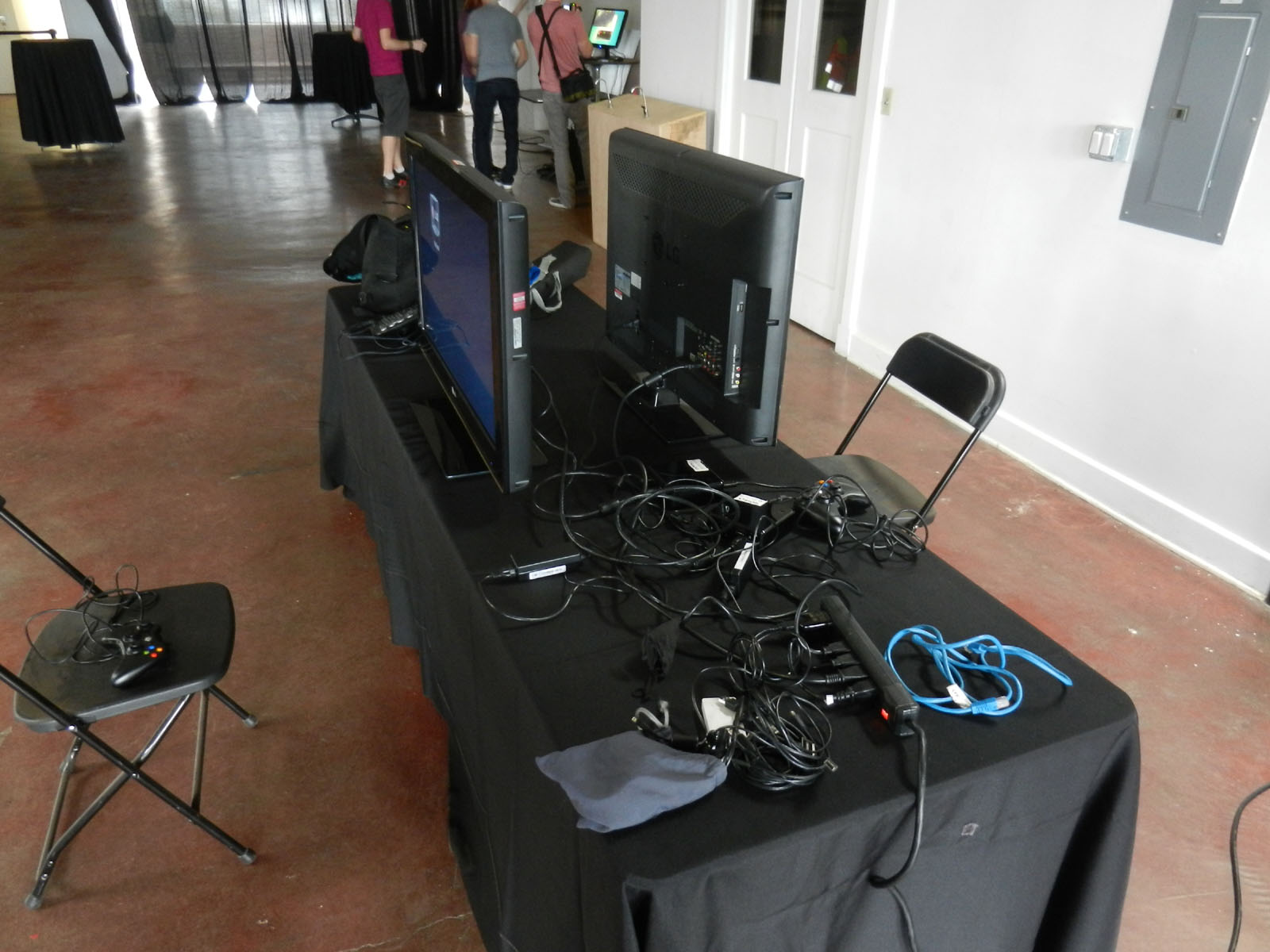
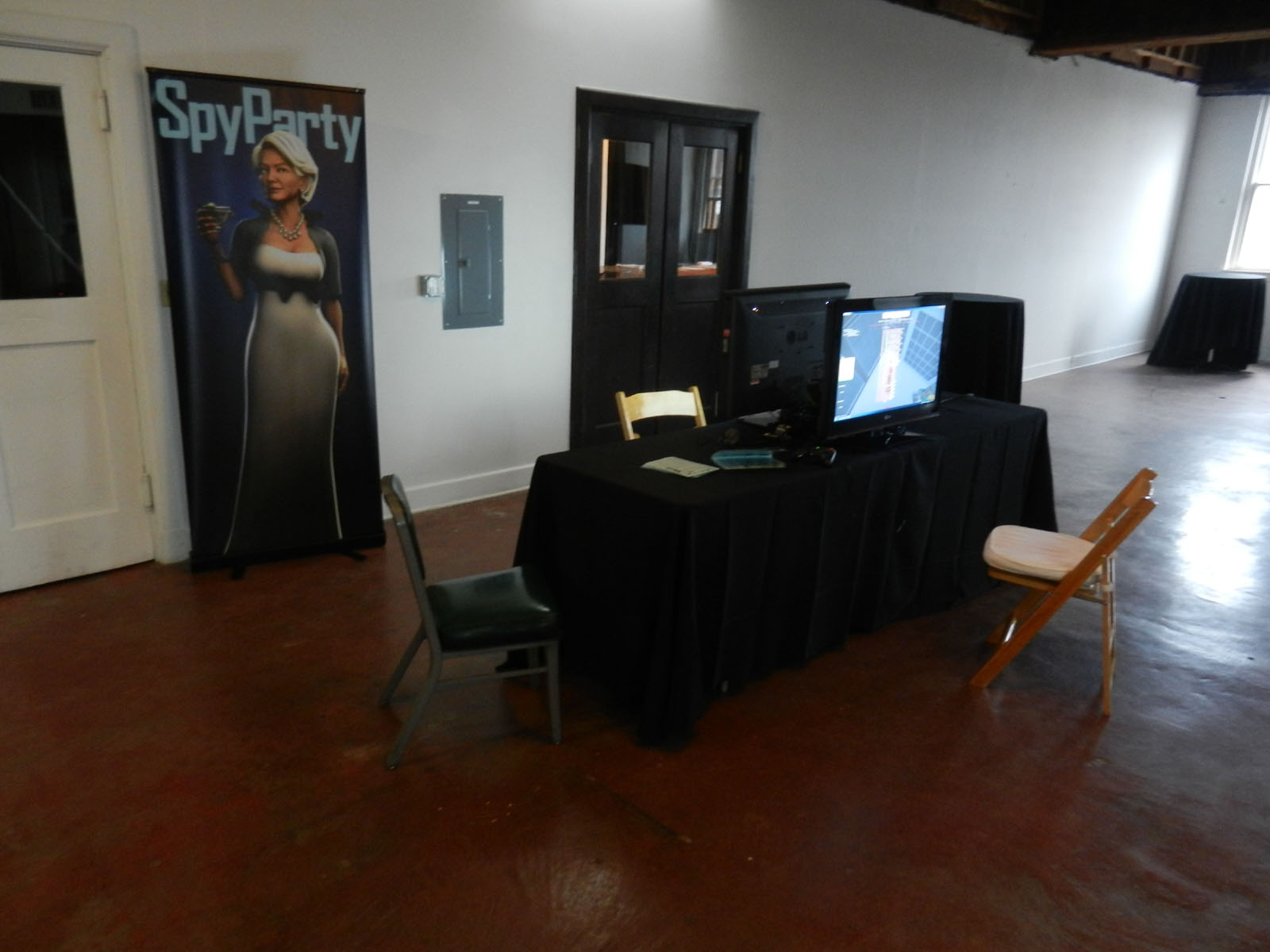
Last week I was invited by Andy Baio to bring SpyParty to the XOXO Festival Arcade in Portland, Oregon. Andy’s been a fan of the game for a while, and they had a great selection of experimental indie games this year at the festival. I had to return early so I missed the lectures over the weekend, but I believe they put videos online, and the Arcade was fun! As usual, I took pictures!


  1. a chip that’s pretty much universally reviled by graphics programers, but I will try hard to make it playable on this old machine! []
  2. and, in fact, you can see the slower T400 runs the game well…sigh. []

PAX West 2013 Report and Gallery

Another PAX, survived.

This one was a little more nuts than usual, and that’s saying something.  Allow me to enumerate the additional levels of difficulty this year:

dual

All things considered, though, it went really well, thanks as usual to my incredible volunteers from the SpyParty community.  This year, John and I had tireless help from zerotka, drawnonward, wodar, canadianbacon, zapdsl, and ardonite, and we could not have done it without them!2

Actually, this year, I have even more people to thank than usual:

  • Jeff Roberts, my debt to you follows the Ackerman Function.
  • Ben Kutcher, for adding NUCtastic to your long list of positive personality traits.
  • I’d like to thank Riot Games for setting up my booth.
  • Kelly Wallick, a long-time friend who also happens to run the Indie MEGABOOTH, saved our bacon using eldrich equipment magic.
  • My daughter, for making a SpyParty t-shirt for me, and telling me I had to wear it in the booth.  I have no idea how a 10-year-old knows what a martini is; I blame her mother.

You’d think after doing so many shows, we’d have this down, but there were a few things we kinda screwed up this year.  All were correctable, and all were relatively minor in the grand scheme of things, but I figure they’re worth mentioning just for the record:

  • We were so busy trying to get the new artwork into the build we didn’t think through the flow of the booth enough, and for the first half of the first day it was basically impossible to see there was anything new in the game.  We had a new level running with the new characters and environments alongside the old levels, but since all the machines were playing the old maps, either as training, or because the new stuff isn’t balanced yet, there was no way for somebody stopping by the booth to see the new stuff.  I would occasionally take over a machine to show somebody the new stuff, but it wasn’t a natural part of the booth flow.  Thankfully, Kelly came to our rescue, and we got a big HDTV on a stand set up, and I hacked an attract-mode into the game, and that helped a lot!
  • There were no signs until the last day that the beta was open, and since the majority of people who visit the booth haven’t heard of the game, or have only heard about it vaguely (see this lecture), a lot of people had no idea they could play online immediately.  You know you’re not thinking straight when you don’t even follow the advice of your own lectures on indie game marketing.
  • We didn’t do a great job of line management the first day, so it felt pretty slow.  I actually didn’t realize how important this was until I noticed the lack of people and pieced together what was missing.  Unfortunately, I was so distracted by last minute programming and logistics that I didn’t notice until the end of Friday.  People who come to your booth want to know where they stand in the world, both figuratively and literally.  If it feels disorganized or if they don’t know how long they’re going to have to wait, they drift off.  Line management is really important.  As soon as we started combing out the line, letting people know what order they were in, and that they needed to read the manual, the booth felt like normal again, with a line of folks reading the manual, onlookers watching the screens, etc.  Lesson learned (and if you’re an indie with a booth, hopefully knowledge transferred)!

Omegathon

The big secret of the whole show for me was that SpyParty was selected as the final game of the Omegathon, the overarching meta-tournament for PAX.  The rest of the games are announced beforehand, but the last game is kept secret, and sprung on the two players for the finals.  Robert Khoo mailed me asking if they could use SpyParty back in late July, we plotted about the right way to do it (since the Omeganauts weren’t going to be able to read the manual!), and I prepared two laptops to play the game on stage.  On the day, Ben Kuchera and Dabe Alan came to the booth, picked up John and me, and we went to go set up.  Sadly, I had to keep even our volunteers in the dark!

The games were great!  Lt. Hummus and Nantucket did a really wonderful job playing under intense pressure, having just had their brains exploded by my rapid-fire tutorial.  Lt. Hummus was kicking himself, because he’d joined the beta a month ago but hadn’t gotten around to playing yet!

I really appreciate Jerry, Mike, and Robert picking SpyParty for the finals; they’ve been fans of the game for a while, and I think they did a wonderful job with the whole thing.  This may sound a bit odd, but as the game designer, I was most impressed by how much respect they afforded SpyParty in the proceedings.  They could have easily hammed it up on stage, or made some wacky game variation for the final match, but they (and the audience) really got the deep concentration part of the design and they totally understood and worked with my questions and concerns about using the game, and it went off nigh perfectly.  I was over the moon!

Here are some good links:

The New Art

People seemed to love the new art, once we were actually able to show it to them!  The new art will be in the public beta build this week sometime, maybe tomorrow.  If you want to check it out, sign up for the beta this way right over here.  Be warned, it is in there, but it’s not very playable, it’s more of a tech demo right now.  It’ll get more playable as time goes on, but the main maps for actually playing the game will remain the old art ones for quite some time!  Much more on this soon when I release the build and stream the release notes!

Picture Gallery

Finally, the pictures!  Since this post is all about the bullet-points, here are some highlights:

Continue reading ‘PAX West 2013 Report and Gallery’ »

  1. …for some suitably liberal definition of “playable” []
  2. like, literally, we could not have actually done the conference without them! []
  3. Or so he claims…but look, a black man with a goatee who is not Morgan Freeman!!! []

Conversation Mockup Animation Reveals

Welp, doing this three times a week while I’m struggling to get the new art in for PAX is just not working, so I’ll bail on the strict Monday, Wednesday, Friday commitment, and just upload these every few days between now and the show. Remember to subscribe to the SpyPartyGame channel to be notified when I upload these and other videos.  

Oh, and you can play SpyParty right now if you join the beta!

Here’s a new animation reveal video, this time with all the characters showing new talk and listen animations in simulated conversations. These conversations are done by sequencing the animations together in the editor, there’s no AI control over the conversation flow right now, so the real game conversations will be a bit different, but these should give you and idea of how they’ll feel.

I bought a new USB soundcard to get the actual analog circuitry far away from the laptop to try to get the mic noise down.  Seems like it worked out okay, the voiceover is definitely higher quality.1

  1. Well, higher audio quality, I make no claims about the voice or the content! []